Mental health and physical health are connected in more ways than many people realize.
During Mental Health Awareness Month, we shared several reminders about stress, rest, burnout, nervous system recovery, and the importance of checking in with yourself. This topic matters because stress is not just something that happens “in your head.” Your body feels it too.
At Long Life Med, we believe patients deserve care that looks at the whole person — not just one symptom at a time.
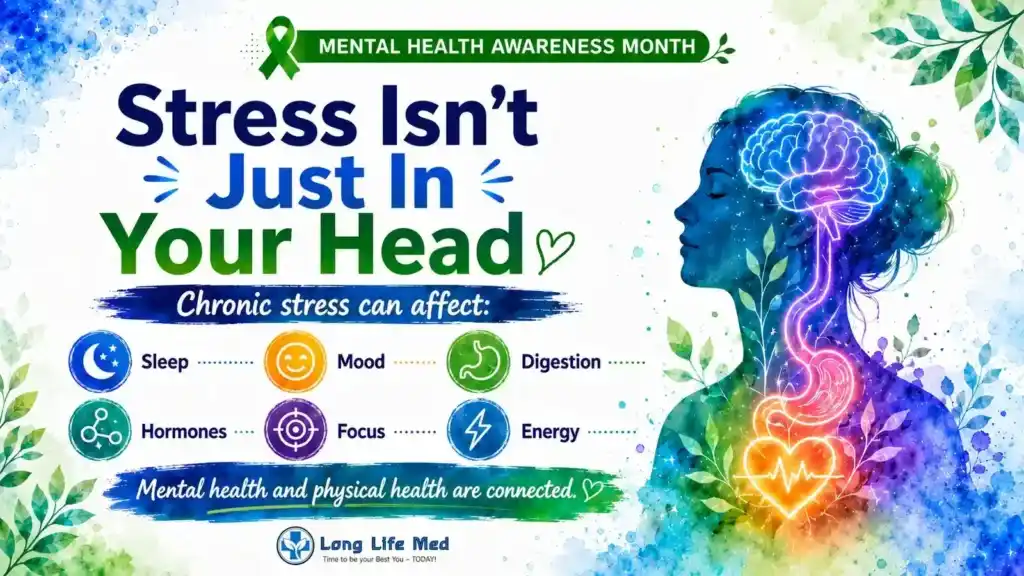
Stress Is Not Just Mental
Stress can affect how you think and feel, but it can also affect how your body functions.
Chronic stress may show up as:
- Poor sleep
- Fatigue
- Brain fog
- Digestive issues
- Muscle tension
- Headaches
- Irritability
- Anxiety or overwhelm
- Cravings or weight changes
- Hormone changes
- Higher inflammation
- Feeling “wired but tired”
This is why it can be frustrating when people are told, “It’s just stress.”
Sometimes stress is not the whole diagnosis. Sometimes stress is the clue that the body has been carrying too much for too long.
Before You Push Through, Check In
Many people are used to ignoring early signs that they are overwhelmed. They push through fatigue, poor sleep, tension, irritability, and brain fog until the body forces them to slow down.
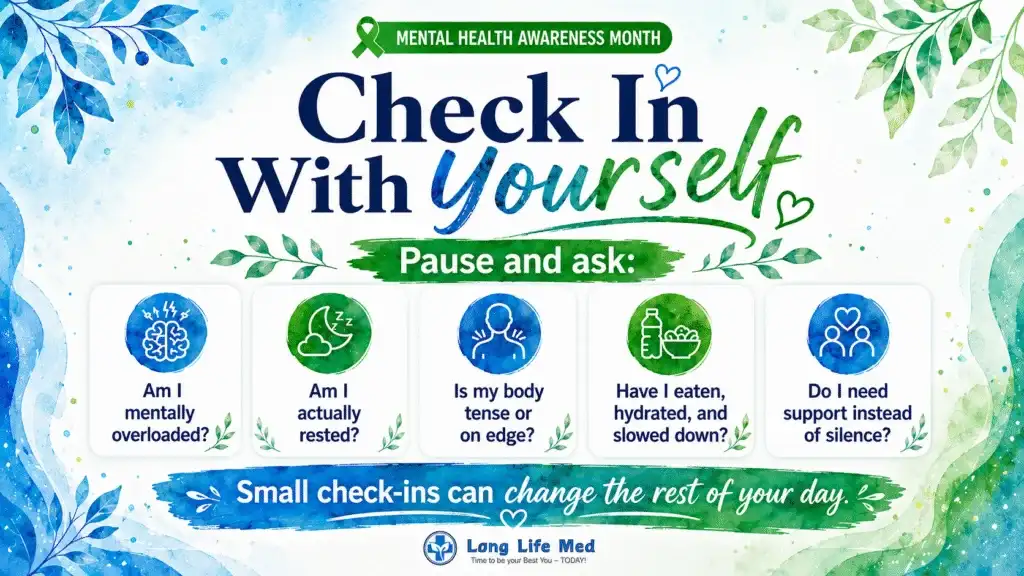
A simple self check-in can help.
Ask yourself:
- Am I mentally overloaded?
- Am I actually rested?
- Is my body tense or on edge?
- Have I eaten, hydrated, and slowed down?
- Do I need support instead of silence?
These questions are not complicated, but they can be powerful. They give you a moment to notice what your body may have been trying to tell you.
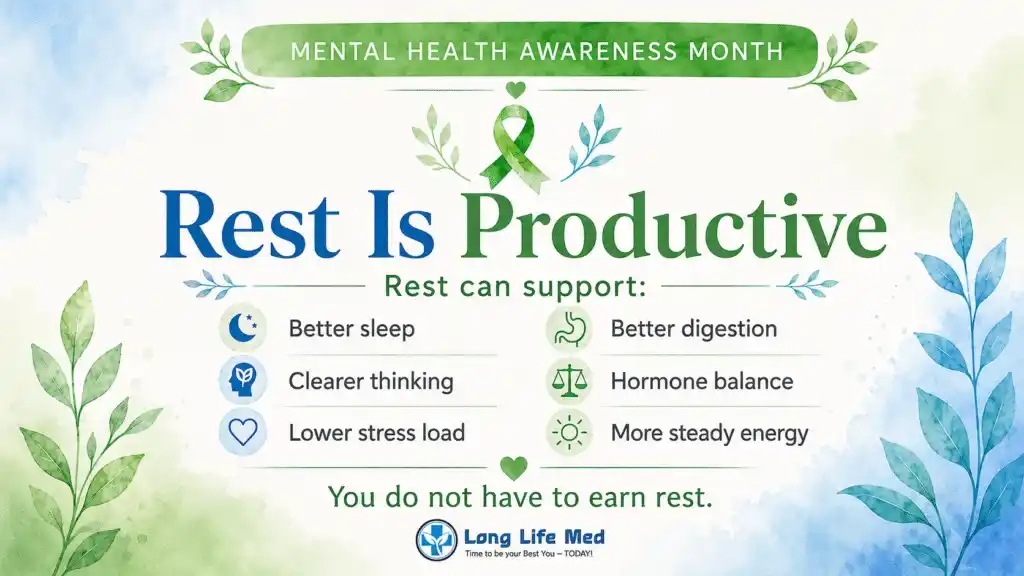
Rest Is Productive
Rest is not laziness. Rest is not weakness. Rest is not something you have to earn only after burnout.
Real recovery supports the body.
Rest can help support:
- Better sleep
- Clearer thinking
- Lower stress load
- Hormone balance
- Better digestion
- Immune function
- More steady energy
- Emotional resilience
In a busy culture, many people feel guilty for resting. But the body cannot stay in “go mode” forever. Recovery is part of health.
If you are resting but never feeling restored, that may be a sign to look deeper at sleep quality, stress load, nutrition, hormones, inflammation, medications, medical conditions, or lifestyle patterns.
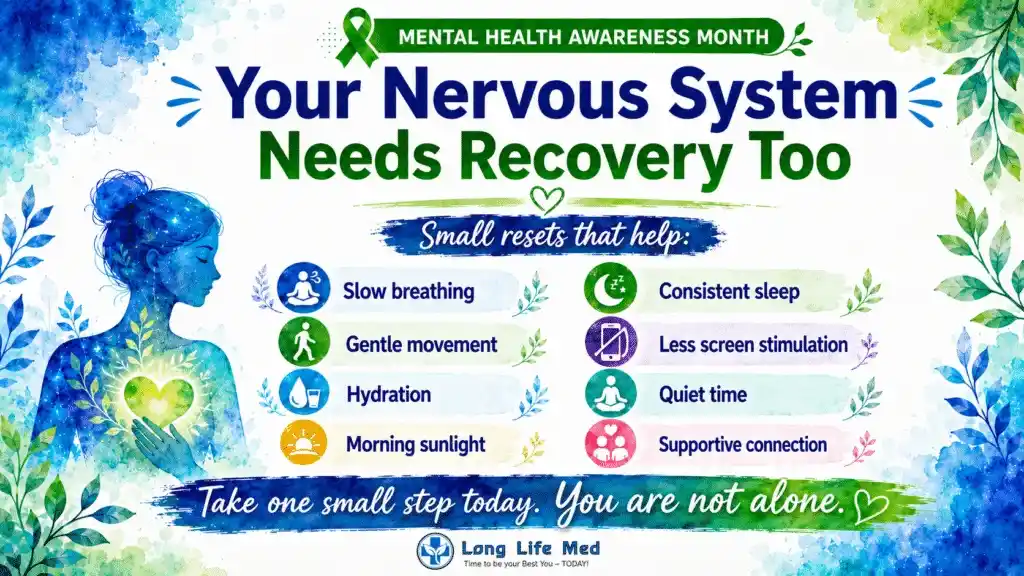
Your Nervous System Needs Recovery Too
When stress stays high for too long, the body can get used to living in a constant state of “go, go, go.”
That can affect:
- Sleep
- Digestion
- Muscle tension
- Focus
- Energy
- Irritability
- Heart rate
- Blood pressure
- How calm or safe you feel in your own body
Nervous system recovery does not have to be complicated. Small resets can help.
Examples include:
- Slow breathing
- Gentle movement
- Hydration
- Morning sunlight
- Consistent sleep
- Less screen stimulation
- Quiet time
- Supportive connection
- Time outdoors
- Mindful pauses during the day
You do not have to fix everything in one day. Small resets still matter.
Mental Health and Physical Health Work Together
Mental health is not separate from the rest of the body.
Sleep, stress, nutrition, hormones, inflammation, gut health, blood sugar, relationships, work demands, grief, trauma, and physical illness can all affect how someone feels mentally and emotionally.
That does not mean every emotional symptom has a simple physical cause. It also does not mean lifestyle changes replace professional mental health care when someone needs it.
It means the whole person matters.
A thoughtful approach to health should ask better questions:
- How are you sleeping?
- How is your energy?
- Are you under ongoing stress?
- Are you eating enough protein and nutrients?
- Are hormones, blood sugar, thyroid, or inflammation playing a role?
- Are you getting time to recover?
- Do you have support?
- Are symptoms being dismissed too quickly?
At Long Life Med, we believe patients deserve time, listening, education, and a deeper look at the patterns behind their symptoms.
You Are Not Alone
Stress, burnout, anxiety, fatigue, poor sleep, and feeling overwhelmed are common — but they should not be ignored.
You are not weak for needing rest.
You are not lazy for needing recovery.
You are not “just stressed” if your body is showing signs that something needs attention.
Mental health is health.
Your mind matters.
Your body matters.
And you are not alone.